Denis Cercasin
Architecture
Table of contents
Overview
Rent Tracker is a lightweight web-based tool that helps property owners and managers track rent payments, manage tenants, and automate reminders via Telegram.
The system supports:
- Managing apartments, tenants, and rental agreements
- Logging rent payments and tracking unpaid months
- Automatically sending monthly reminders
- User registration via Telegram bot
- Email support via SendGrid
- Clean UI using **Jinja2 templates and Bootstrap
The app is designed using Flask + SQLite, with modular Blueprints, WTForms for forms, and a custom ORM layer. Telegram integrations run in separate services.
Codemap
Thanks to repo-visualizer, we generated the following bird’s-eye view of the codebase.
It helps contributors quickly understand the structure and relative size of different modules and files:
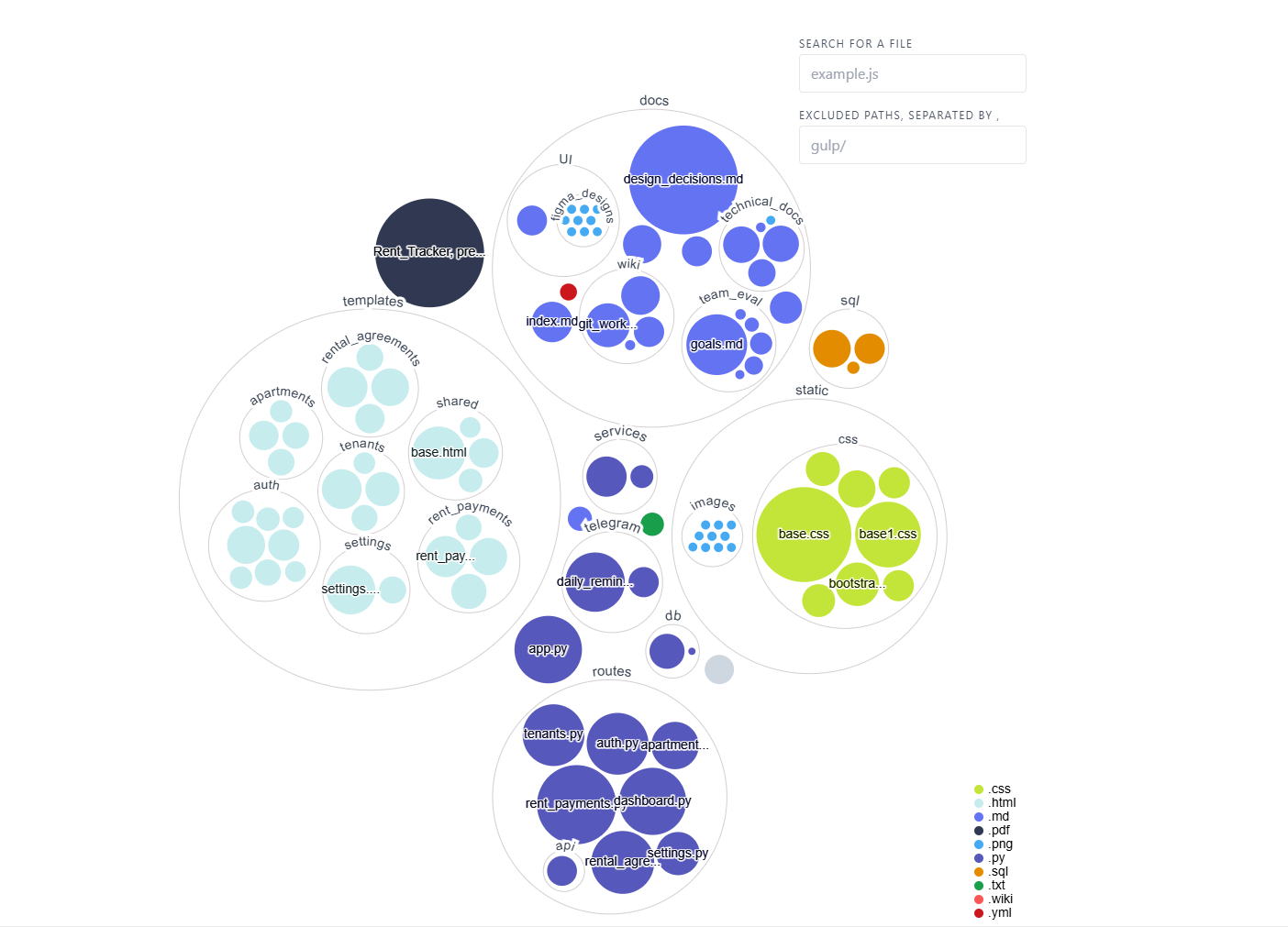
Here’s how the project is structured:
- app
- routes
- auth.py #Login, registration, password reset
- apartments.py #Apartment CRUD
- tenants.py #Tenant CRUD
- rental_agreements.py #Assignment of tenants to apartments (with dates)
- rent_payments.py #Tracking rent status
- settings.py #Telegram connection, profile settings
- dashboard.py #Main screen with all financial data
- api/ #API for fetching all data about unpaid rents
- templates/ # Jinja2 templates (base.html, modular views)
- static/ # CSS, Bootstrap, images
- services/ #Helper functions
- telegram/ #Telegram bots for registration and sending reminders
- daily_reminder/ #Reminder script (can run via cron/GitHub Actions)
- db/ # SQLite init and ORM helpers
- forms/ #Used for WTForms integration
- docs/ #Full documentation hosted on Github Pages
- models/ #User data model for SQLAlchemy integration
- sql/ #Manipulating the data in the database
- LICENSE
- README.md
- requirements.txt
- app.py # Main Flask app
- routes
💡 Additional Diagrams available at: docs/design_decisions.md
Cross-Cutting Concerns
Authentication & User Management
- Built using Flask-Login
- Passwords are hashed
- WTForms used for form validation
Rental Logic
- One tenant per rental agreement at a time per apartment
- Each agreement has start_date and optional end_date
- Gaps between tenants are allowed and correctly handled in reminders
Reminders via Telegram
services/daily_reminder.py: checks daily for unpaid months- Runs manually or via cron / GitHub Actions
- Skips months with no active tenant
Telegram Bot for User Setup
services/telegram/bot.py: allows users to connect their Telegram account via/start- Uses polling locally; designed to switch to webhook in production
Email Notifications
- Powered by SendGrid
- Used for password reset flow
Data Model
We maintain a normalized relational structure with:
usersapartmentstenantsrental_agreementsrent_payments
See full diagram & explanation: docs/data_model.md
External Integrations
| Service | Purpose | Status |
|---|---|---|
| Telegram Bot | Rent reminders & registration | ✅ (manual, not hosted) |
| SendGrid | Email-based password reset | ✅ |
| Bootstrap | Frontend styling | ✅ |
Design Decisions
- Avoided full implementation of SQLAlchemy: to keep DB layer lean and closer to SQL for learning
- Telegram integration split: separate scripts for registration & reminders
- Flexible reminder logic: avoids notifications during gap months
- Manual testing: Due to timeline, full test coverage not implemented
See docs/design_decisions.md for full rationale.
Appendix
Application Flow Diagram
The following diagram illustrates the high-level flow of the Rent Tracker application, including user interaction, database logic, and integration with external services:
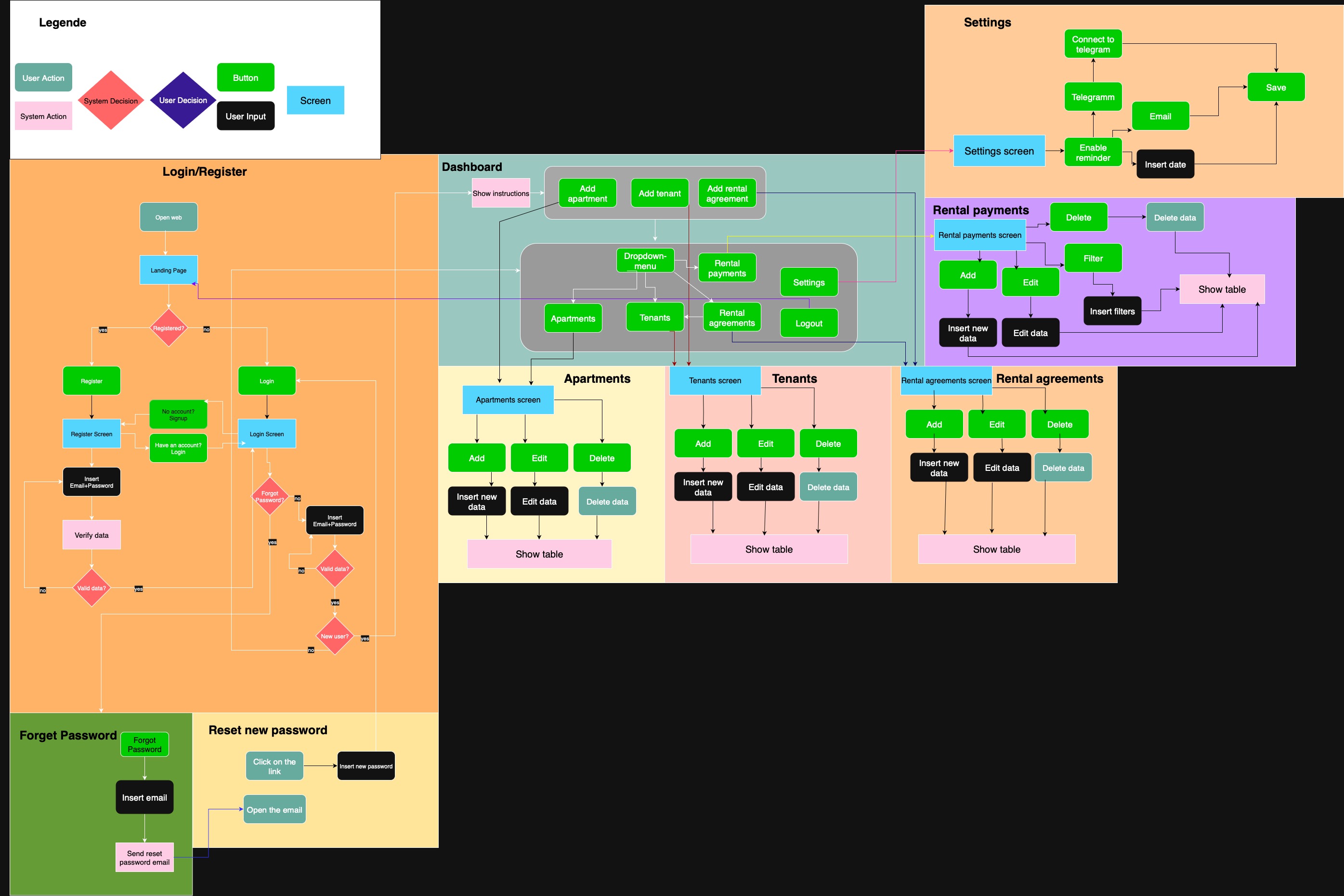
This overview provides new developers with a mental model of how data flows through the system from login to rent reminders.
Last build: 20 Jul 2025, 00:44+00:00